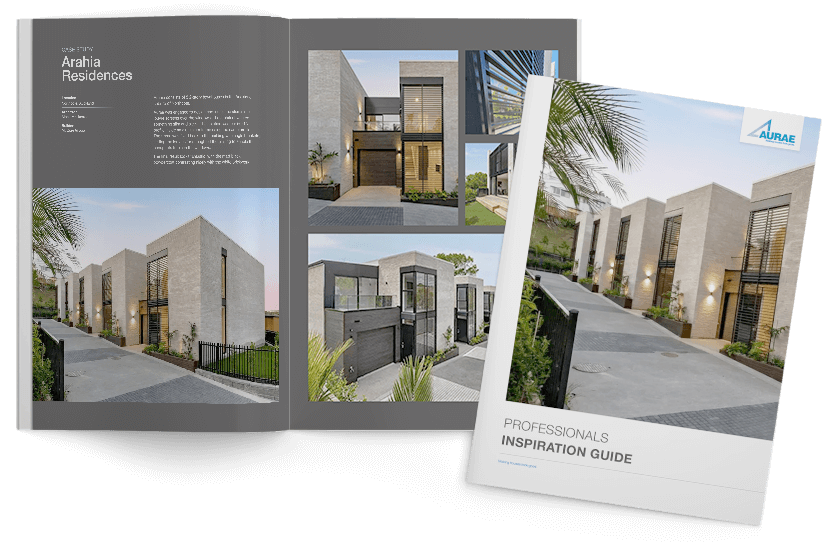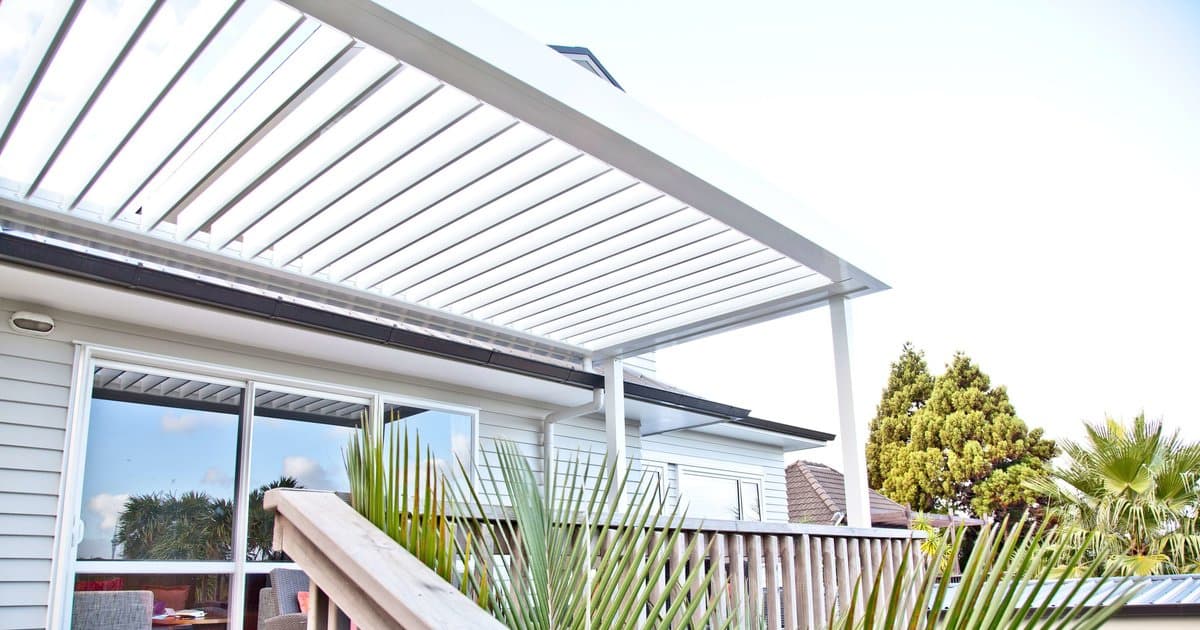
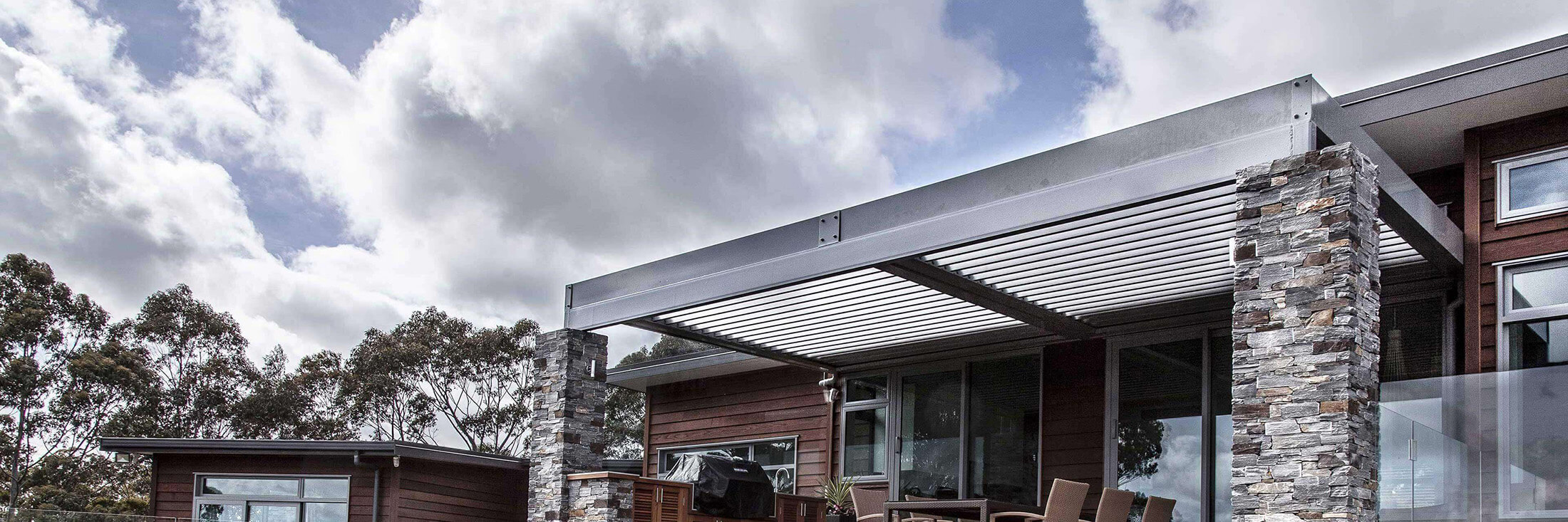
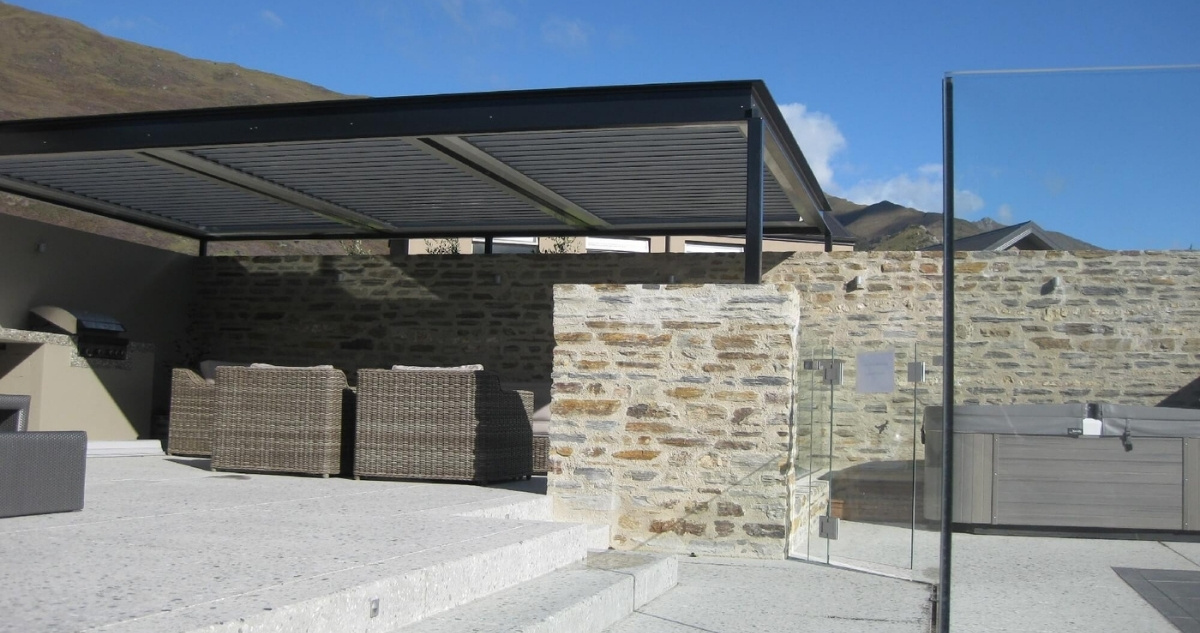
Aurae has a large range of aluminium pergolas used across a multitude of applications on New Zealand homes and developments. In this article, we explore why we choose aluminium, how the main components of a pergola work together, and the options available with Aurae.
Why aluminium pergolas?
Aluminium is a versatile material and can be used in a variety of ways to produce pergolas that deliver value to the modern dwelling. This includes variation in louvre blade shape, having the louvre blades fixed or rotating, fixing details, and variations in the overall design structure. Aurae works every day with architects to design and engineer pergolas that bring aesthetic value, sunshade, and weather protection to residential dwellings.
Modern aluminium pergolas also support how New Zealanders like to live. They create covered outdoor rooms for dining, sheltered seating outside a townhouse, or a simple structure over a deck that ties in with window joinery and other façade elements. They can be used as a standalone feature or combined with sliding shutters, privacy screens, window shrouds or entrance canopies to create a consistent language across the exterior.
Aluminium has the added advantage of being durable and resistant to coastal conditions, which makes them a strong option for the batch or coastal home.
They are low maintenance, highly weather resistant and can be finished in a wide range of powder coat colours, including woodgrain effects, to suit most architectural styles.
Choosing louvre blades for your pergola
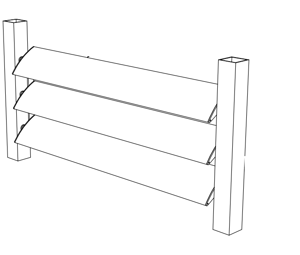
When designing a pergola, one key consideration is what profile to use for the horizontal cross members. Aurae provides three basic louvre blade shapes: rectangle (the Solaris blade), aerofoil (the Aurora blade) and parallelogram (the Caldera blade). If there are louvre blades elsewhere on the dwelling, often the same shape blade is selected for the pergola to match, but ultimately the louvre blade shape is selected based on personal preference.
Each blade shape is available in a range of sizes, so you can tune the look and performance. Larger blades can span further and create bold shadow lines, while smaller blades give a finer, lighter look that suits more delicate pergola structures. Fixed blades can be used to control sun, shade and privacy, or to line up with other façade elements for a clean, repeatable pattern.
Once you have decided which shape to use, you then need to ensure that the blade can span the required distance. Span tables for all our louvre blades can be found on the technical specs page of our website. In broad terms, the larger the blade, the further it can span. If you wish to use one that cannot span the desired distance, changes can be incorporated into the support structure as below.
It is also possible to have timber louvre blades for a more organic touch, while still using aluminium for the frame and main structure.

Designing the pergola structure
Once you have decided on the horizontal cross members to use, the next thing that requires attention is the overall support structure of the pergola. How far the beams must span and the loads they have to carry are the first considerations when designing the support structure. Aurae’s internal design team can assist when selecting the correct beam size, starting from 100 x 50 rectangular hollow section (RHS) up to 300 x 50 RHS.
In broad terms, aluminium beams can span up to around 6.0 metres. Any spans larger than this can be designed from steel. Should the selected horizontal louvre blade not be able to span the desired distance, intermediate beams can be incorporated into the support structure to keep the blades within their span limits.
A well thought out structure will also consider wind zones, snow loading where relevant, and how the pergola ties back into the main building. Aurae can help you integrate pergolas with other aluminium elements such as window shrouds and entrance canopies so the overall façade remains consistent and buildable.
Fixings, foundations and consent
The next thing that needs to be considered when designing a pergola is the fixing detail. Whether the pergola is fixed to the house structure or freestanding, footings are required for the support posts. These can be from concrete or included in the timber structure of a deck. Aurae can assist architects with footing requirements.
If you want the pergola fixed into the house, Aurae can provide you with fixing details suited to the cladding type. These details cover typical claddings used in New Zealand, such as brick, weatherboard and sheet claddings, and show how to manage drainage and flashing around the penetrations.
These details can be used in your building consent documents to demonstrate compliance with the waterproofing requirements of the building code (E2). Careful attention to fixings and drainage at design stage helps reduce maintenance in the long term and ensures the pergola performs as intended in wet and windy conditions.
.jpg?width=2200&name=banner-Harmon-Res-AUOR-(10).jpg)
Louvre blades rotating or fixed
Today’s louvred pergolas can have blades either rotating or fixed. The rotating louvre blades provide complete shelter from the elements with an internal gutter system and motors. If the budget does not allow for rotating louvre blades or only sunshade is required, the blades can be fixed.
Rotating louvre blades are achievable with either manual rotation or automated systems. By combining the latter with rain sensors or remote control, the homeowner benefits from convenience and practicality at the touch of a button. Blades can be opened to bring in sunlight and cross breezes, or closed to create a sheltered space that is still visually light and connected to the garden.
Fixed blade pergolas are a simple and cost-effective way to add shade and architectural interest, especially for group housing and townhouse developments. Rotating louvre roofs add extra flexibility, allowing outdoor spaces to be used in a wider range of weather conditions.
Aurae can assist with finding the perfect solution for your project needs, whether that is a simple fixed blade pergola or an opening louvre roof integrated with other façade elements.
How long does an aluminium pergola last?
Aluminium is used across Aurae’s product range because it is a durable, weather resistant material that performs well in New Zealand conditions. Aluminium louvres and pergola components do not rust, which makes them particularly suitable for coastal and high wind environments where traditional timber structures can warp, crack or deteriorate over time.
With the right design, powder coat finish and basic cleaning to remove salt and contaminants, an aluminium pergola is designed to last for many years while retaining its appearance. Similar systems are commonly described as having a life expectancy of around 20 to 30 years with normal maintenance, and the same principles apply when those louvres are used in a pergola structure.
Actual life expectancy will still depend on the project location and maintenance regime, but they should be considered a long term part of the home rather than a short term feature.
Is a steel or aluminium pergola better?
Both steel and aluminium have a role to play in design and the best choice comes down to what the structure needs to do.
For most residential projects, aluminium offer a good balance of strength, weight and ease of installation. Beams can span significant distances and work well with extruded louvre blades, while keeping the structure lighter and easier to handle on site. Aluminium is also easier to integrate with other Aurae products such as louvres, canopies, shutters and privacy screens, and can be powder coated to match window joinery and other exterior elements.
Where spans become very large, or where the pergola is part of a heavier structural frame, steel beams can be introduced into the design. In broad terms, aluminium beams can span up to around 6.0 metres and any spans larger than this can be designed from steel, with louvres fixed to the supporting structure.
In practice, many projects use a combination of materials. Aluminium is typically used for the visible pergola elements and louvre blades, while steel may be used behind the scenes for primary structure where needed. Aurae’s design and engineering team can advise on the best combination for each project.
What are the disadvantages of an aluminium pergola?
For most New Zealand projects, aluminium pergolas offer more advantages than disadvantages, which is why they are widely used across Aurae’s work. However, there are a few limitations to be aware of when you are deciding if aluminium is the right choice.
The first is span. Aluminium beams are well suited to typical residential pergola spans, but for very large clear spans a steel structure may be required in behind to carry the loads. In these cases, aluminium louvres and pergola elements are usually fixed to a supporting steel frame.
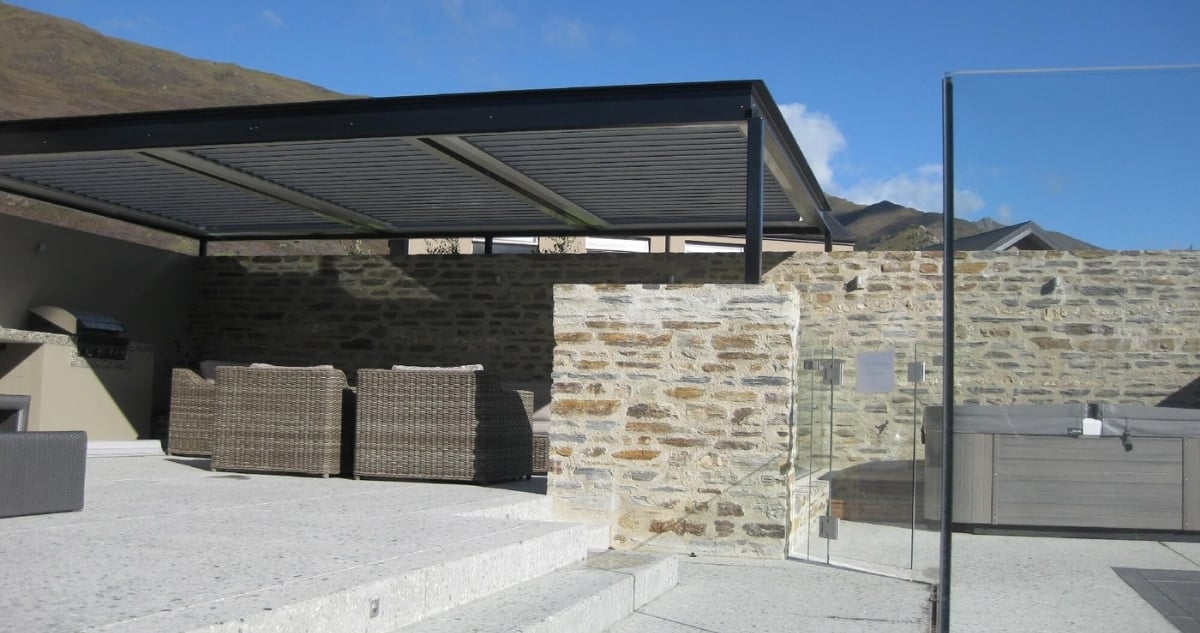
The second is coverage. A fixed aluminium pergola with louvre blades provides shade, screening and architectural value, but it does not create a fully watertight outdoor room. If you are looking for complete weather protection, an opening louvre roof system is a better fit, with integrated gutters and drainage designed to keep the space usable in wet conditions.
Finally, like any powder coated exterior product, an aluminium pergola will benefit from occasional washing and care, especially in coastal environments. Regular rinsing and gentle cleaning will help keep the finish looking good and support the long term performance of the system.
Overall, aluminium pergolas remain a low maintenance, long lasting and flexible option for outdoor structures. Understanding these limits at the design stage will help you choose the right mix of materials and products for each project.